A Thin Coat That Handles Hard Use
Cerakote coating in Anamosa for metal components that need a durable, consistent finish without added bulk
Iron Hide applies Cerakote to automotive parts, fabricated metal components, equipment pieces, and specialty items where a conventional finish would wear through or add unwanted thickness. The ceramic-based chemistry bonds directly to prepared metal, producing a coating measured in thousandths of an inch that still resists abrasion, corrosion, and the mechanical contact that comes with regular use. This matters most for components where dimensional tolerance is tight or where appearance has to hold up alongside function.
Before any coating is applied, the metal surface goes through thorough preparation—typically media blasting to strip existing finishes, oxidation, and surface contamination that would prevent proper adhesion. That step is not optional; it is what determines whether the finished product lasts or peels. Once the surface meets the required profile, Cerakote is applied in a controlled environment and cured at elevated temperature to lock in the finish. The result is a uniform coat with no runs, pooling, or uneven buildup.
Contact Iron Hide Coating to discuss whether Cerakote is the right finish for your specific component and project requirements.
How Cerakote Performs Where Other Finishes Fall Short
Cerakote's ceramic base gives it a different performance profile than paint or standard liquid coatings. Where a painted surface chips at impact points and spreads from there, Cerakote is formulated to absorb localized contact without the same propagation pattern. For parts that see repeated handling, tool contact, or mechanical cycling, that distinction shows up over time as retained appearance rather than a surface that needs refinishing every season.
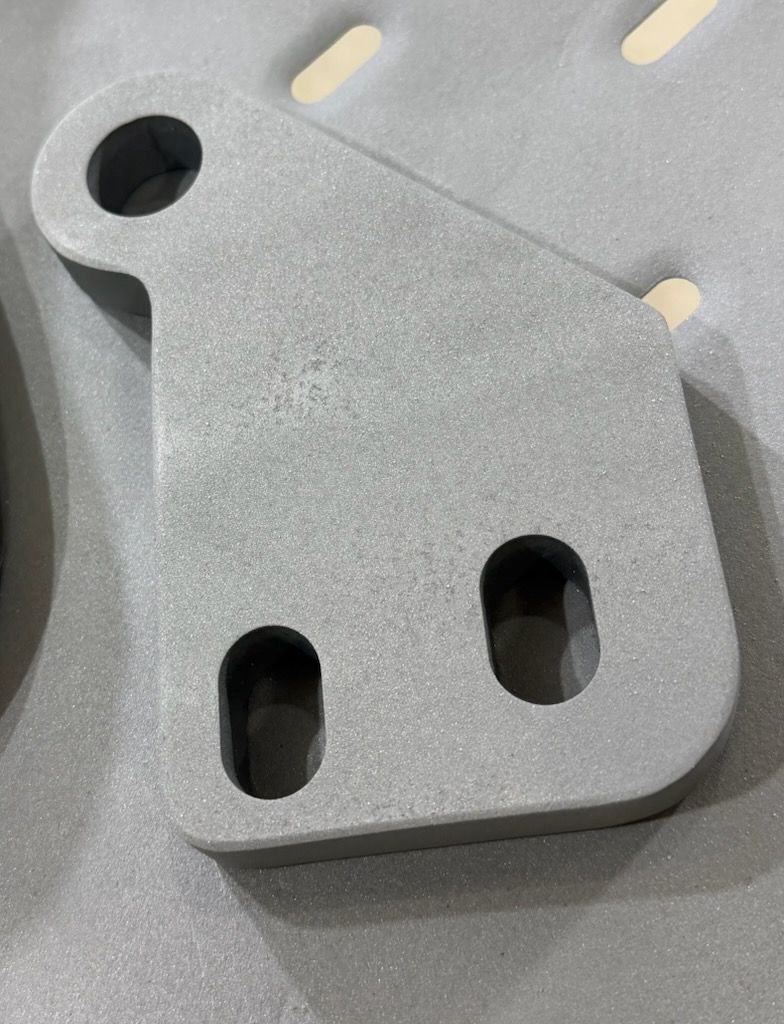
After coating is complete, the finished component comes back with consistent color across the entire surface, sharp edges that are coated rather than built up, and a finish that does not feel tacky or soft. Iron Hide offers a range of colors and finish types—matte, satin, and others depending on the application—so the visual result can be matched to a broader project or kept consistent with existing components.
Cerakote is not the right choice for every project. Very large flat panels, parts with geometry that complicates even spray coverage, or pieces that need a high-build fill over surface irregularities may be better served by powder coating or a different process. Knowing which finish fits the actual use case is part of what the consultation is for.
Common Questions About the Cerakote Process
The questions below address how Cerakote is applied, what preparation is involved, and what to expect from the finished result. They focus on the process itself rather than general business information.
What surface preparation is required before Cerakote can be applied?
The metal surface must be stripped of any existing coating, grease, or oxidation before Cerakote is applied—typically through media blasting—so the ceramic coating bonds directly to clean, profiled metal rather than sitting on top of a compromised layer.
How thick is a Cerakote application compared to powder coating?
Cerakote is applied in a much thinner layer than powder coat, often in the range of one mil or less, which makes it appropriate for components where tight tolerances or fitment would be affected by a heavier build-up.
Why does the curing step matter for Cerakote adhesion?
Oven curing at the correct temperature triggers the ceramic chemistry to fully cross-link, which is what converts the applied coating from a film into a hard, bonded surface—skipping or shortcutting that step produces a finish that performs significantly worse under contact and wear.
What types of metal components are well-suited to Cerakote?
Cerakote works on steel, aluminum, and most ferrous and non-ferrous metals, making it appropriate for automotive parts, fabricated brackets, firearm components, equipment housings, and other specialty items where both protection and appearance are priorities.
How do you choose between a matte and a satin Cerakote finish?
The choice is usually driven by the visual context of the surrounding project—matte finishes read as more utilitarian and reduce glare on parts that are handled or viewed in direct light, while satin adds a slight sheen that reads as more finished in display or show applications.
Iron Hide works with
customers in Anamosa through a straightforward review of the component, its current condition, and the intended use before any application begins. Send project details or photos to start a conversation about whether Cerakote fits your application.